
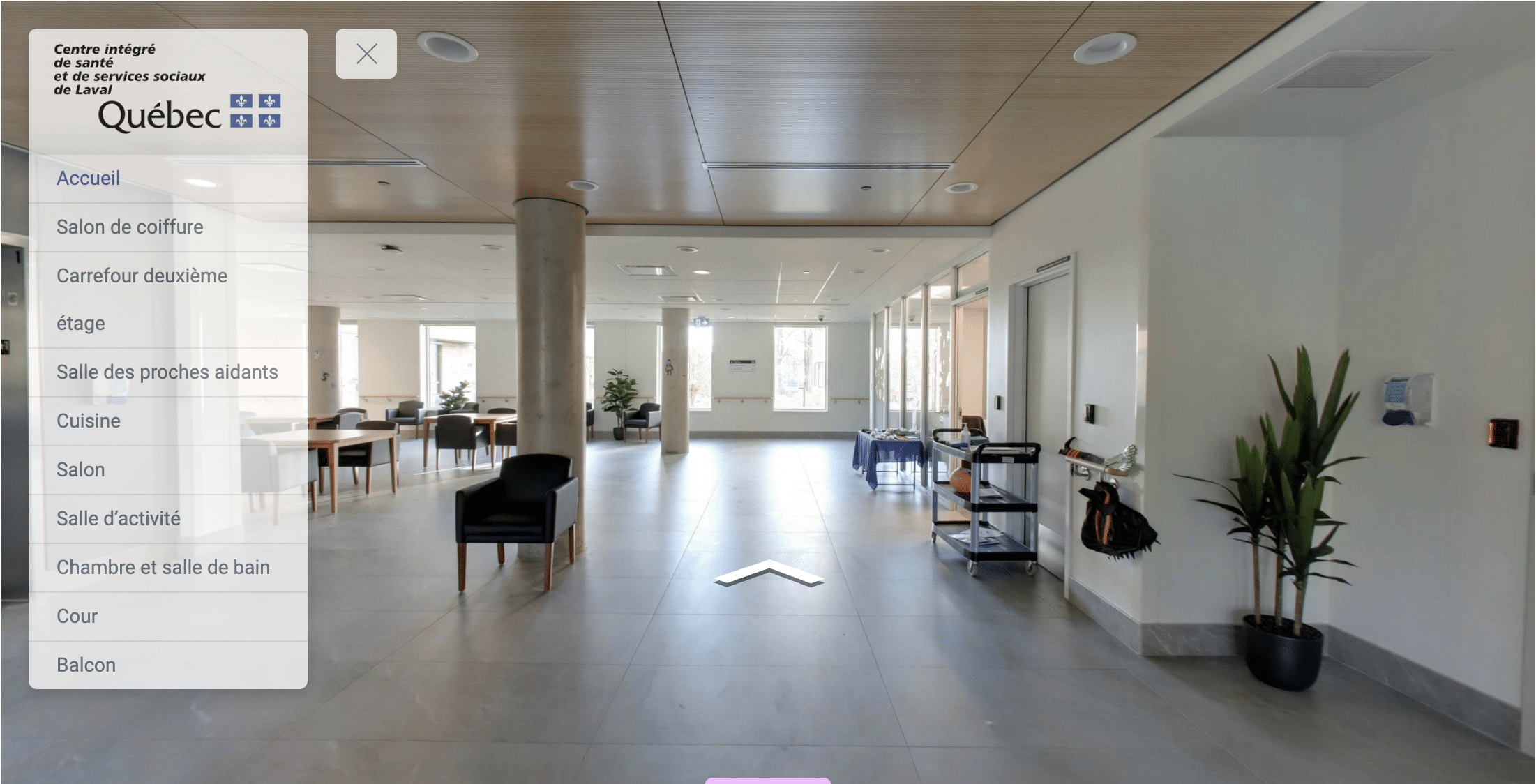
Health care is constantly evolving, always seeking to improve the patient experience and the effectiveness of care. In this pursuit of innovation, the CISSS de Laval turned to a promising technology: 360 virtual tours. This article explores how this technology is revolutionizing access to health care and improving the experience of patients and health care professionals.
This content is provided by TourMkr; by clicking, you agree to load it.The use of 360 virtual tours at the CISSS de Laval represents a significant step forward in access to health care. It demonstrates the health sector's adaptability and commitment to innovation, with tangible benefits for both patients and professionals.
What is a 360 virtual tour?
-
How the technology works:
- A 360° virtual tour is a simulation of an existing location, generally composed of a series of videos or images.
- It allows the user to move through the space and view it from all angles, creating an immersive experience.
-
Uses in different fields, particularly health care:
- In real estate, these tours help clients view properties remotely.
- In healthcare, they are used to familiarize patients with facilities before their arrival, thereby reducing their anxiety.
The CISSS de Laval project:
-
The CISSS de Laval and its commitment to innovation:
- The CISSS de Laval is a health and social services organization focused on providing integrated, high-quality services to the community.
- Technological innovation is at the heart of its strategy to improve the care experience.
-
Objectives of the 360 virtual tour project:
- The goal is to make the facilities more accessible to patients and staff.
- Staff training and patient familiarization with the facilities are also key objectives.
Benefits of 360 virtual tours in health care:
-
Improved patient experience:
- Virtual tours reduce patient anxiety by familiarizing them with the location before their appointment.
- They allow patients to navigate at their own pace and explore available services.
-
Training and orientation tool for staff:
- New hires can familiarize themselves with the facilities before their first day.
- This also serves as a continuing education tool for existing staff.
-
Facilities planning and management:
- Virtual tours help with space planning and resource management.
To learn more about 360 virtual tours and their potential in health care, visit Panosphere 360.
Sources and references:
Useful links: